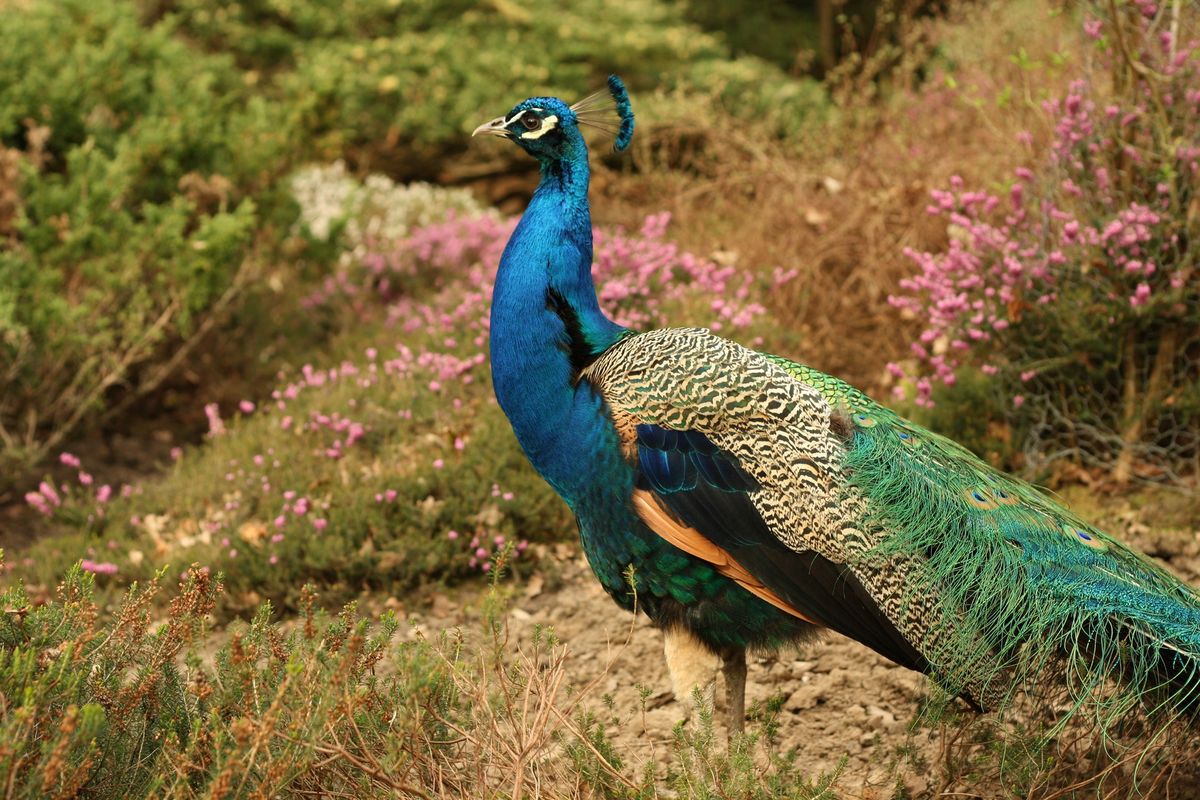
Short answer: Usually yes, especially in rural areas. Peafowl (the male is the peacock, the female the peahen) are domesticated birds that are generally treated like poultry, not wildlife, so most countries don't require a special permit to own one. The real limits come from local rules: city zoning, livestock or poultry bylaws, and noise complaints. Many towns and cities ban them in residential areas.
Why peacocks are usually legal
Indian peafowl, the common blue peacock, have been kept by people for thousands of years and aren't endangered. They're also not native to North America, the UK or Australia. That matters because wildlife protection laws (such as the US Migratory Bird Treaty Act) protect native wild birds, and peafowl aren't on the list.
The exception is the green peafowl, which is endangered and covered by trade restrictions, so buying or importing one is far more regulated.
United States
There's no federal permit for keeping peafowl. Check:
- Zoning: Many cities only allow poultry or "fowl" on agricultural or rural-residential land, or limit how many birds you can keep on small lots.
- Livestock and poultry ordinances: Some cities list peafowl by name; others cover them under "fowl" or "poultry."
- Noise ordinances: Peacocks are very loud, especially in breeding season. Repeated complaints can lead to fines or orders to remove the birds.
- HOA rules: Many homeowners' associations ban poultry and farm animals.
- State agriculture rules: Some states require poultry flocks to register or follow disease-control rules (for example, during bird flu outbreaks).
Canada
No federal permit is needed. Rules are mostly municipal:
- Many cities, including large ones like Toronto, prohibit keeping peafowl and other poultry in residential areas.
- Rural municipalities usually allow them under agricultural zoning.
- Some provinces encourage or require small flock owners to register for disease control.
United Kingdom
Peafowl don't need a licence and aren't covered by the Dangerous Wild Animals Act. In England and Wales, keepers of 50 or more poultry or other captive birds must register with the Animal and Plant Health Agency; check current GOV.UK guidance if you keep fewer, as smaller keepers have separate rules. Neighbours can complain to the council about statutory noise nuisance under the Environmental Protection Act 1990, which can lead to an abatement notice.
Australia
Peafowl are generally legal to keep as domestic poultry. Local councils set limits on poultry numbers, distance from neighbours' houses and noise. Some states require keepers of certain numbers of birds to register for biosecurity purposes.
Before you get a peacock
- Check your zoning and local animal bylaws, or call your city or council.
- Check your HOA or strata rules.
- Talk to your neighbours: peacock calls carry a long way.
- Plan for a large, tall, covered pen. Peafowl fly well and roost high.
- Find a vet who treats poultry or exotic birds.
Sources

 Animal Law